Hertie AI goes Podcast
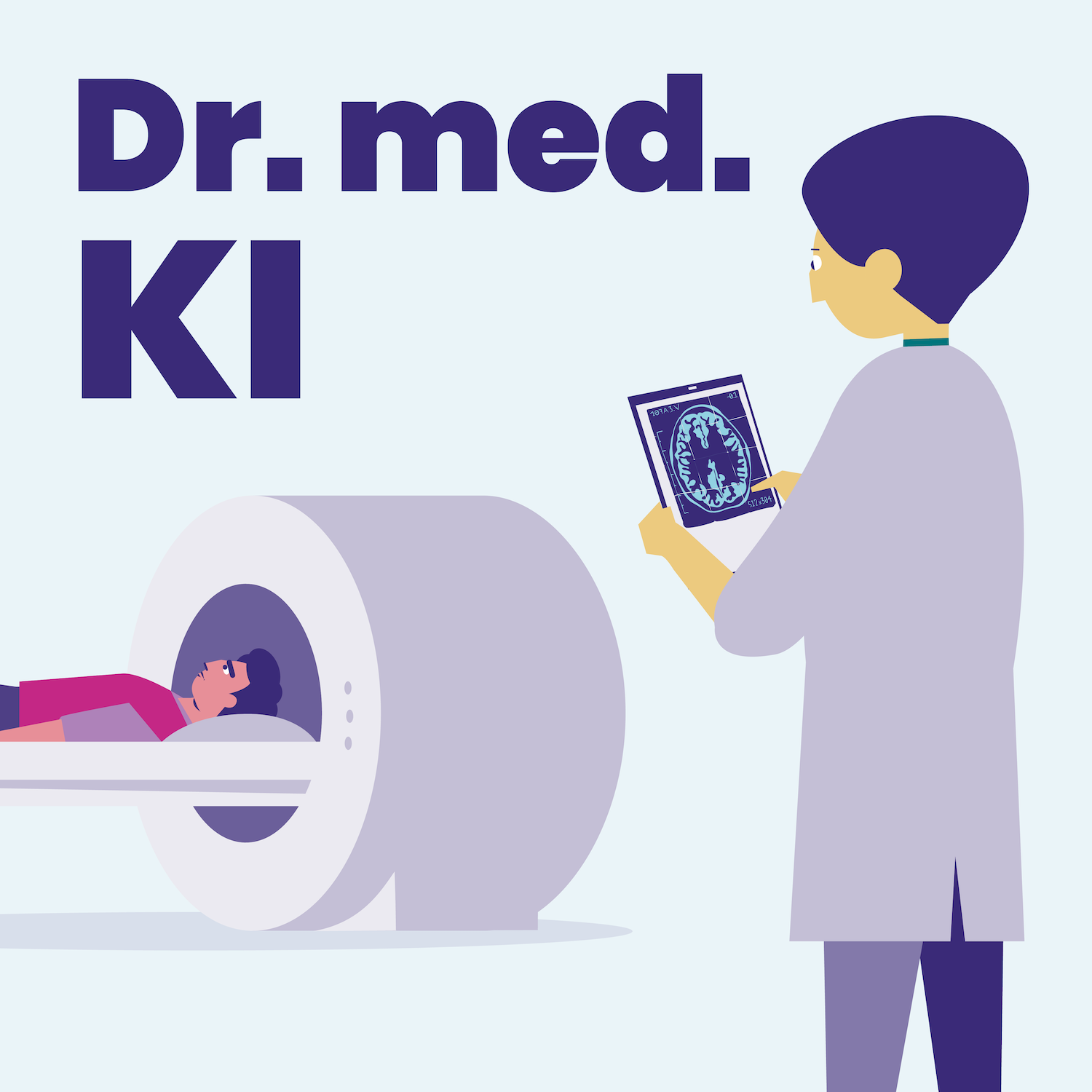
How can artificial intelligence help us better understand, diagnose, and treat diseases of the brain and nervous system? To explore this question, Hertie AI has joined forces with KI-Campus, the German learning platform for artificial intelligence, to produce a new season of Dr. med. KI — a German-language podcast hosted by Hertie AI director Kerstin Ritter.
The current season, "AI in Brain Health," brings together eight episodes spanning clinical neuroscience, psychiatry, and medical imaging from computational models of decision-making in obsessive-compulsive disorder and schizophrenia, to AI chatbots as a supplement to psychotherapy, to large-scale neuroimaging studies of depression and Parkinson's disease. Across all eight conversations, a common thread emerges: AI is not replacing clinical expertise, but it is opening up new ways to see, predict, and personalize.
Several episodes offer a direct window into research happening at Hertie AI itself. Hertie AI director Philipp Berens, director of the institute, starts the season with a look at how machine learning is transforming ophthalmology, from decoding the complex wiring of cell types in the retina to predicting the progression of diseases like diabetic retinopathy and age-related macular degeneration. Hertie AI Fellow Georgia Koppe, has an episode on personalized psychotherapy, explaining how behavioral and neural time-series data, collected via smartphone studies and neuroimaging, can guide the selection of personalized therapies. Independent Reserach Group Leader Stefanie Liebe brings the clinical perspective of epileptology, describing how her research group is working to link EEG signals with clinical seizure descriptions to support the kind of complex differential diagnosis that currently demands hours of expert review. And Florian Kofler closes the Hertie AI thread with a look at AI-supported tumor segmentation in MRI images of gliomas. Work that matters directly for surgical planning, and that also grapples honestly with the regulatory and infrastructural hurdles that still slow the path from research to clinical routine.
You can listen to Dr. med. KI on all platforms. Enjoy listening!
Share article
Author
Prof. Dr. Kerstin Ritter
 Prof. Dr. Kerstin Ritter is a Full Professor of Machine Learning for Clinical Neuroscience at the University of Tübingen and is a Director at the Hertie Institute for AI in Brain Health. She is PI in the Excellence Cluster “Machine Learning – New Perspectives for Science” and the Tübingen AI Center as well as multiple interdisciplinary research consortia focusing on innovative methods at the intersection of machine learning, statistics and medical applications in neurology and psychiatry. Her research focuses on using advanced AI methods to assess brain health through diverse data types, including neuroimaging, clinical, genetic, and behavioral data. Her contributions to the field have been recognized with awards such as the NARSAD Young Investigator Grant and the Deutsche Multiple Sklerose Gesellschaft Research Prize.
Images