
NeurIPS 2025
Kyra at NeurIPS 2025
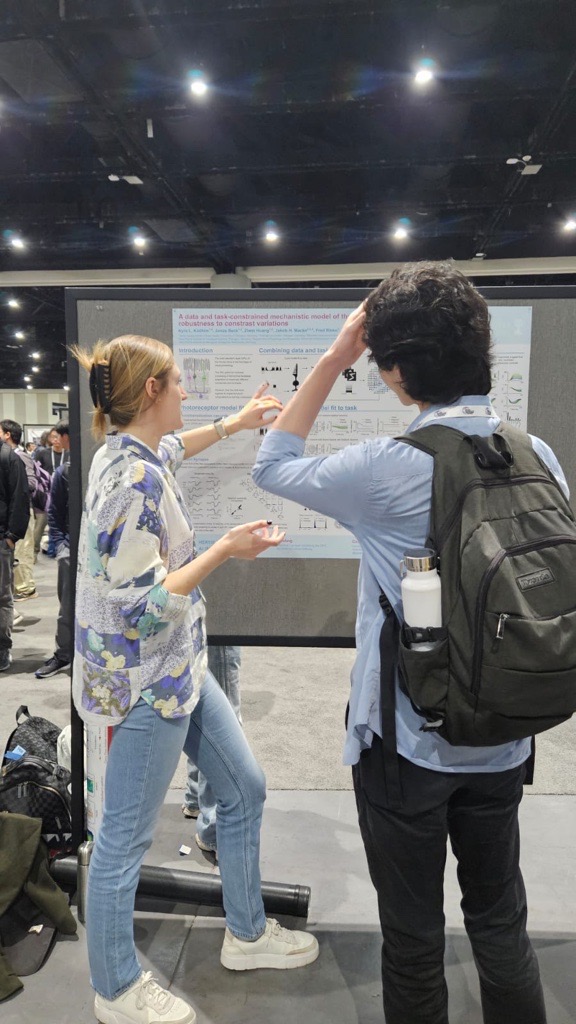
I just attended the 39th Conference on Neural Information Processing Systems (NeurIPS) in San Diego, California. The conference was an action-packed six day event including a day of tutorials, three days of main conference, and two days of workshops. In the main conference, I presented a poster on my paper “A data and task-constrained mechanistic model of the mouse outer retina shows robustness to contrast variations.” Another paper from the Berens lab was also presented at the conference by coauthor Dominic Gonschorek; this paper is titled TRACE: Contrastive learning for multi-trial time-series data in neuroscience
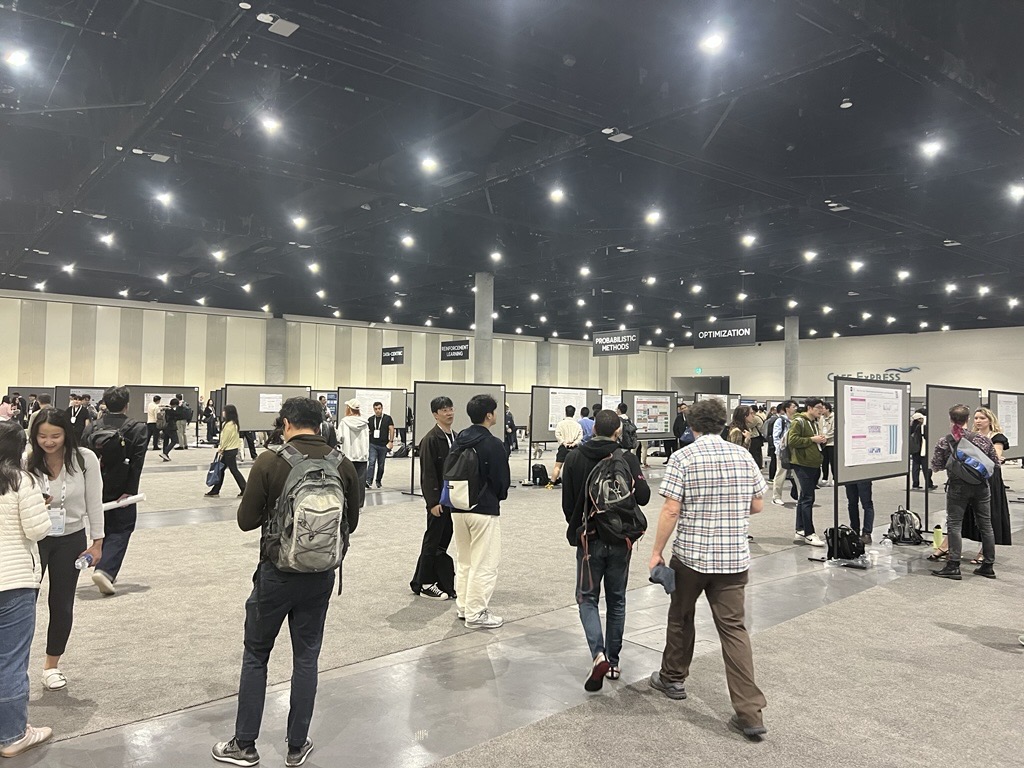
The NeurIPS main conference included insightful keynote talks by Rich Sutton, a pioneer in reinforcement learning, and Zeynep Tufekci, a professor and New York Times columnist addressing the societal impact of AI. There were also two poster sessions per day, and many other researchers from the AI campus in Tübingen presented their work.The workshops were also interesting with reparte among many well-known scientists over a broad range of topics. Unfortunately one could not be in multiple places at once! I was able to attend talks from the workshops titled "mechanistic interpretability," "data on the brain and mind," "symmetry and geometry in neural representations," and "foundation models for the brain and body," as well as the competition "Mouse vs. AI: A Neuroethological Benchmark for Visual Robustness." These workshops and talks during their poster sessions gave me a lot of inspiration for my own work.
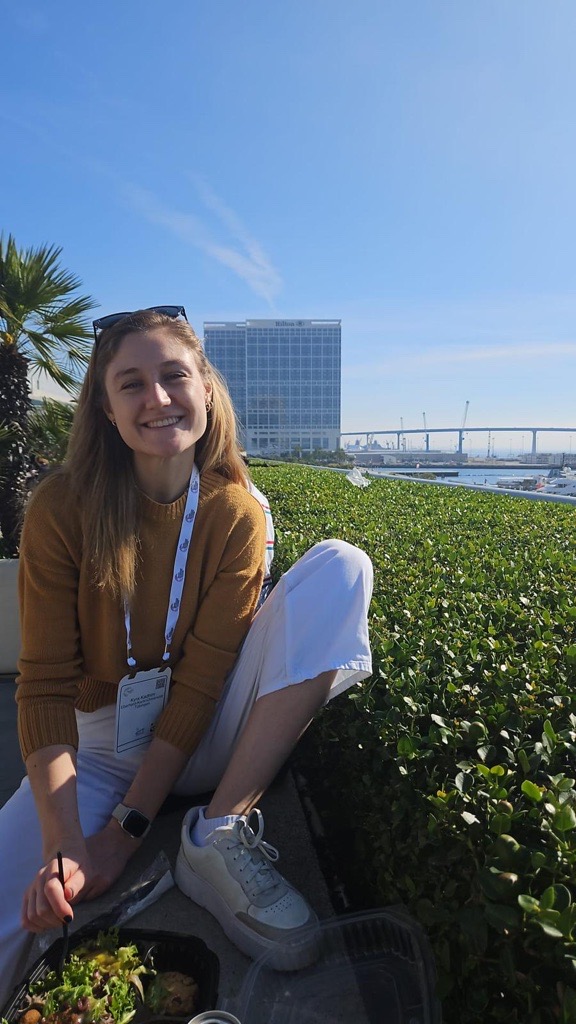
“It was also nice to see some old friends and acquaintances, some completely unexpected. We had a lot of fun in the sun eating good Mexican food and running along the boardwalk.”

Share article
Author
Kyra Kadhim
 Kyra Kadhim is a PhD student in the Department of Data Science at the Hertie Institute for AI in Brain Health at the University of Tübingen and an IMPRS-IS scholar. In the past, she has studied pulse-coupled oscillator network dynamics and mechanistic models of the cortex. Her current work focuses on understanding how the brain processes visual information from the very first synapses in the retina to build a strong foundation for our understanding of higher cortical functions. She is also interested in how the neural implementation of visual information processing can inform artificial neural network architecture and how machine learning techniques for parameter optimization and model discovery can be leveraged to build useful mechanistic models.