Deep Learning Indaba 2026 in Nigeria
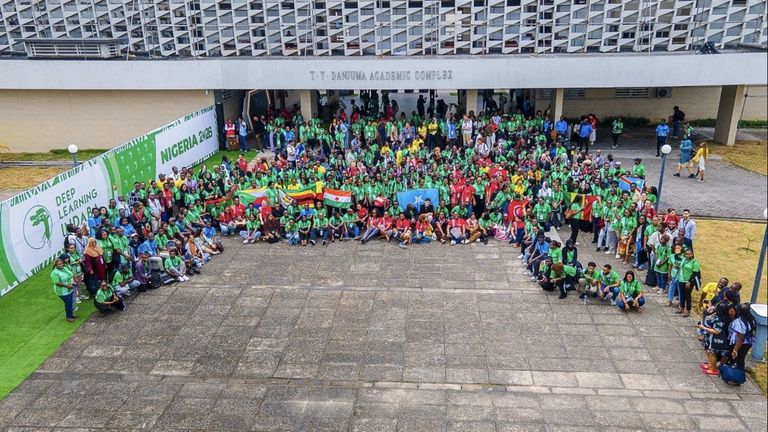
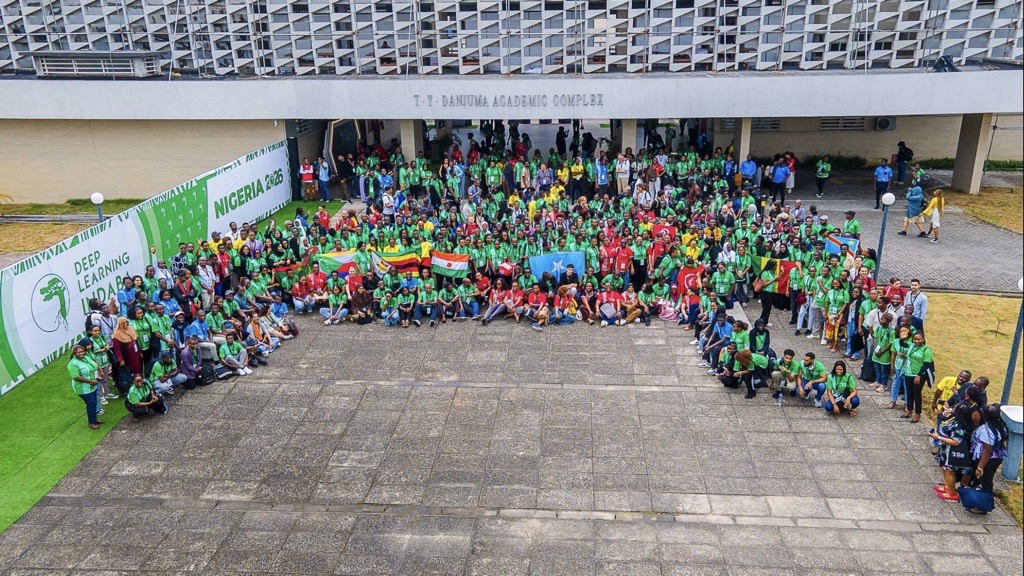
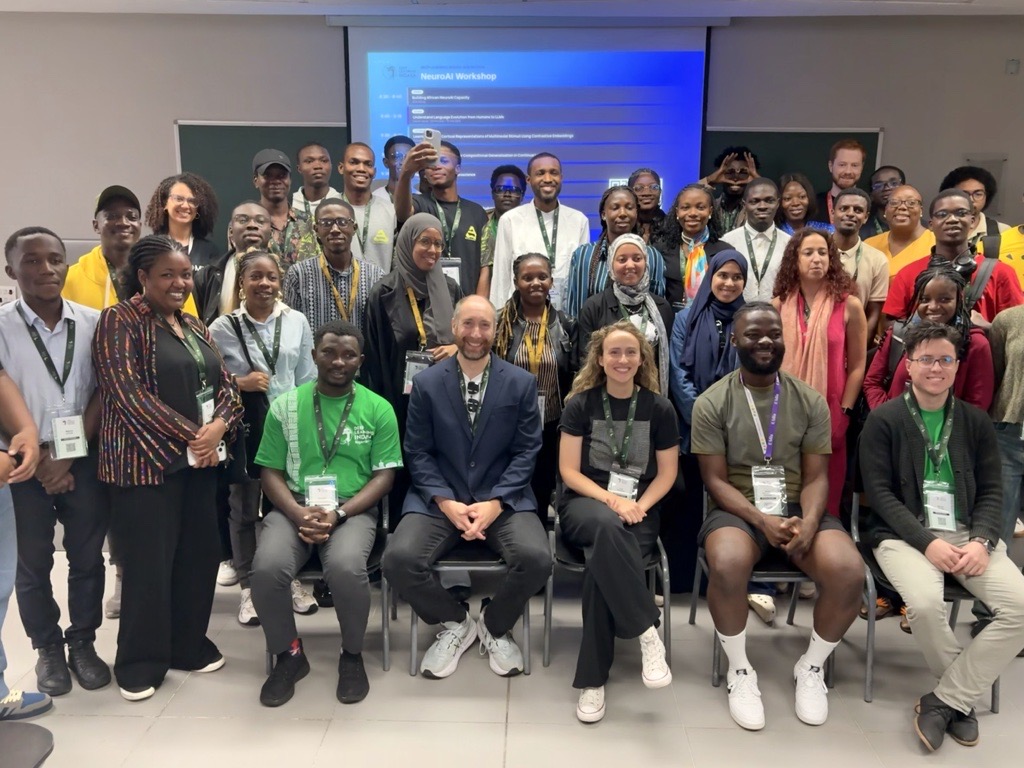
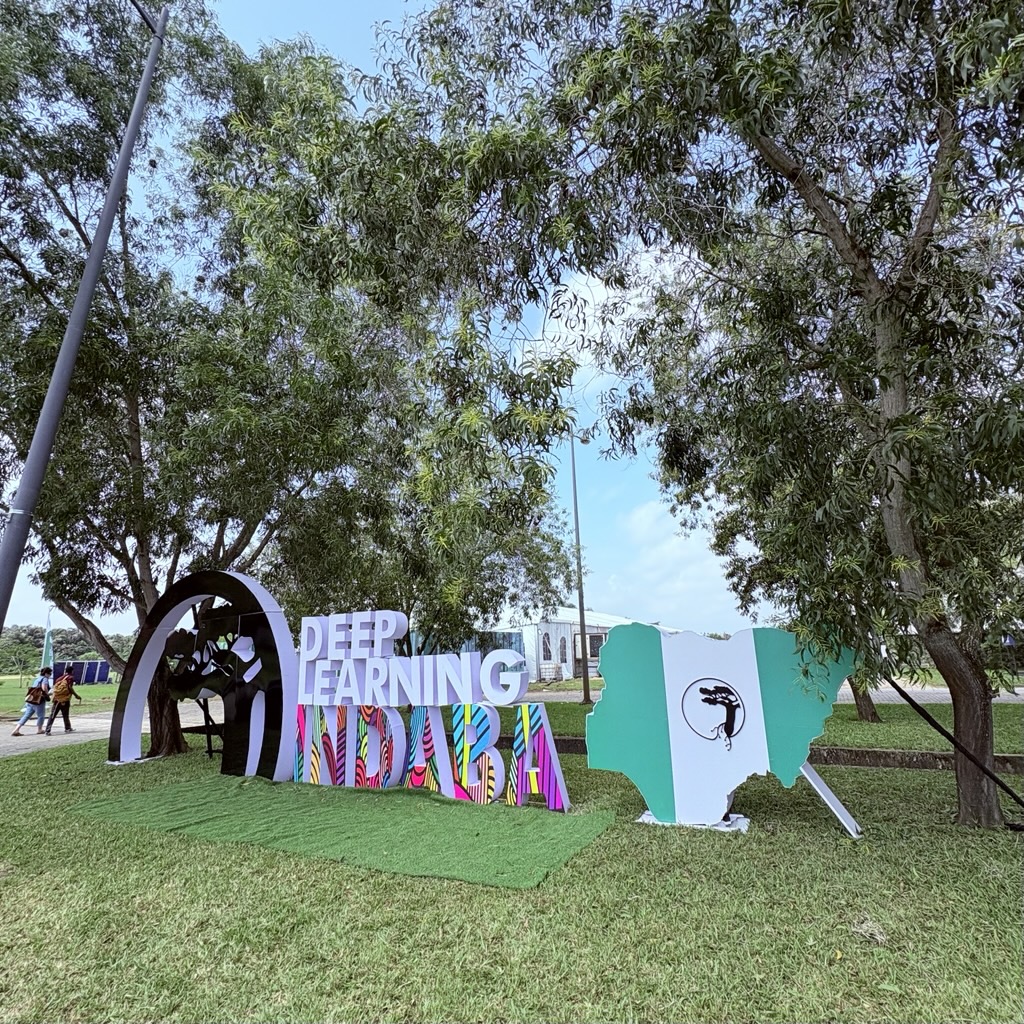
Hertie AI postdoc Lisa Schmors attended and taught at this year's Deep Learning Indaba in Lagos, Nigeria, and organized the satellite workshop on NeuroAI.
The Deep Learning Indaba is the largest machine learning and AI conference on the African continent. It brings together people from research and industry to build the future of AI in Africa.
Our satellite workshop was about NeuroAI, what research happens at the intersection of neuroscience and artificial intelligence, but also about what it takes to grow that expertise on the African continent.
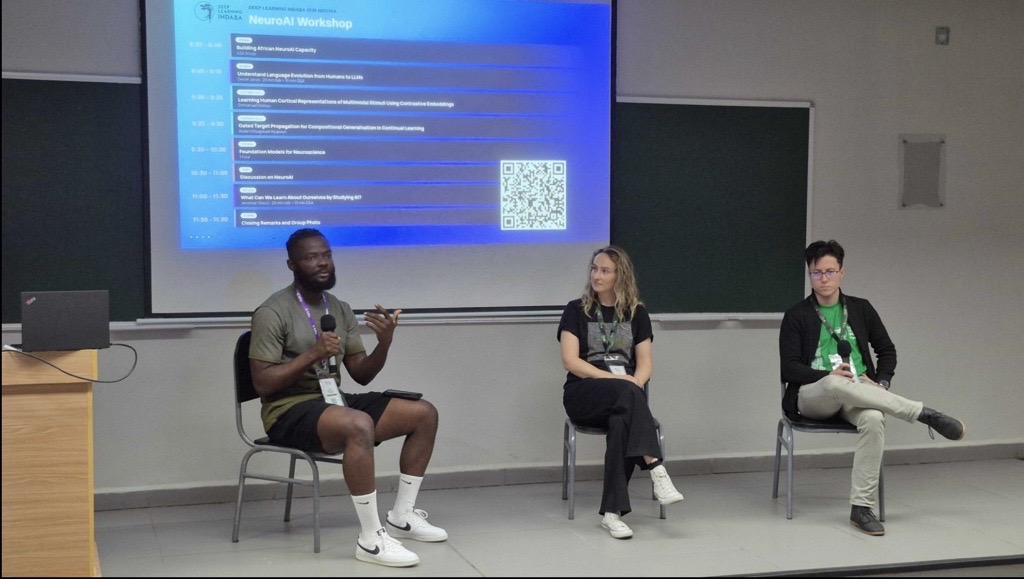
The workshop opening was by Dr. AZA Allsop (Yale University) with a talk on "Building African NeuroAI Capacity", followed with keynote talks by Dr. Devon Jarvis from the Machine Intelligence and Neural Discovery (MIND) Institute, who spoke about "Understanding Language Evolution from Humans to LLMs", and Dr. Jonathan Shock from the University of Cape Town, who turned the usual question around and asked what we can learn about ourselves by studying AI.
Then, in a hands-on tutorial, participants worked through a Colab notebook on training and evaluating foundation models for neuroscience, so everyone left with something they could keep using.
We closed with a panel discussion on future directions in neuroscience and AI, career paths, and capacity building on the African continent.
''Thank you to all participants for the engaging questions and for the great atmosphere in the room. The excitement about machine learning in neuroscience was obvious. And the panel discussion was probably as empowering for those of us answering as for the people asking.''
Lisa also wants to thank the collaborative research center “Robust Vision – Inference Principles and Neural Mechanisms” (CRC 1233) from the University of Tübingen for funding her travels an her stay in Nigeria.
Share article
Author
Dr. Lisa Schmors
 Lisa Schmors is interested in the potential synergies between neuroscience and machine learning (NeuroAI). She received her Ph.D. from the University of Tübingen and the International Max Planck Research School for Intelligent Systems (IMPRS-IS). She investigates response patterns of single neurons and their populations using statistical models, as well as identifying structure in neuroscience data using machine learning algorithms.
Images